Thursday, May 9, 2019

Another look from a drift log - three herons


And then, I found another drift log by the Kaw River to sit on. It was the one the three turtles had been resting on just the other day. I could see about forty feet of smooth, sun-whitened wood, resting on the rocks, but I couldn’t tell how much of the log extended down beneath the  muddy river. I straddled the log as if I might ride it on down into the water.

A heron stood on a rocky point catching the spill that comes through the north unit of the Bowersock hydropower plant. The heron was perhaps seventy-five yards away from me, standing motionless on the other side of a small cove of the river. It gave no sign that it noticed me.

I think of herons standing stoically, just watching the world as it turns – quite imperceptibly from I was sitting. From my log, I watched the heron watching. And then, suddenly, it stabbed its bill into the water and came up with a flash of wriggling silver. So much for stoicism.

For me to imagine what herons think is mostly about what I think. And what I want to think is that things make sense. That there’s a reason among the rhymes. I can perceive patterns all around me, but what do they mean?

For instance, over some time I’ve noticed that herons seem to like to play a kind of game – I might call it ‘King of the river.’ The game tends to be played in a triangular pattern.  It’s probably is just a territorial thing, but from my perspective the game seems nearly pointless – a game played out of idleness.

As I watched, a heron flew in from somewhere across the way and landed near the one that had caught the fish some minutes ago. That one flew up and over to where another heron was standing near the low island in the middle of the river, bumping that one off. Then that heron flew off somewhere. To some other edge of the river.

The herons settle for a while, but, if I sit long enough, eventually a heron will be flying in to take the spot just across from where I am sitting.

Now I can’t tell which heron is which and one edge of the river doesn’t seem significantly different from another to me. But then I don’t think like a heron. And then, maybe this flying around is indeed all just some kind of a game. Something to do while waiting for something to happen.

And then I felt something. It was almost imperceptible. It felt as if the log I was sitting on had moved. A shudder. I wondered if I was imagining it. Maybe it was I that had moved. Shifted. The river was flowing with only a moderate current and the log seemed well anchored on the large limestone rocks of the levee. But something must have moved. I felt something. Or maybe I just imagined it.

I picked up a light stick lying among the rocks nearby and balanced it across the log. Perhaps with this sensitive instrument, my eyes might see the movement that I thought I felt. If it happened again. The light breeze moved the light stick. So much for that idea. I wasn’t  doing much more than playing my own game.

I looked up to see if the herons were still standing where I had seen them last. Time is not quite measurable when you’re just sitting on a log by a moving river. The river flows. Always changing and yet still the same. Heraclitus said that. I’m just repeating it in my own way.

The heron across the small cove waded slowly along the near edge of the point. It was close enough that I could see a dark band across its gray head. And then the heron waded back. It seemed pointless to ask if there was a point to all of this.

And then the log underneath me moved again. Well, maybe it moved. How could I tell? I watched the log. I looked down its length to where the log extended down into the moving water. It would have to take something pretty big bumping into the end of the log for me to feel it. And then I felt the log shudder again.

Do herons expect two plus two to equal four? Do they think that there a cause for every effect? And then, why should I care if the log moved or didn’t move under me?  Not that I cared very much. As I have said, the movement was nearly imperceptible. But still, I sort of wanted an answer.  A reason among the randomness.

Wondering about things is a very human game to play.

I looked up to see if the herons were about to trade places again.

As if it mattered.

**

 Photos of the Kaw River for comparison:

May 9 - The Kaw River flowing at about 46,000 cubic feet/second.

In the photo at the top, taken a few weeks earlier, about 7,000 cfs.

The Kaw - same river - running 10 feet higher.
This drift log and the one nearby that I was sitting on in this story are long gone.
 
The herons stood watching on that point just across the way.


Sunday, April 28, 2019

Three turtles and a drift log


The air was warming into spring. The sky draped on out to the horizon, white wisps in between the folds of light gray appearing nearly about to part. It was the middle of the afternoon and I had some time, but no intention.  Looking down from the levee, I saw several bumps on a log near the river’s edge. I made my way down a steep gravel pathway and as I got closer to the water, I saw that there were three turtles just resting on the log. And then as I got closer still, each turtle slipped silently into the water.

And then, there I was. By the river. I found my own drift log to rest on.

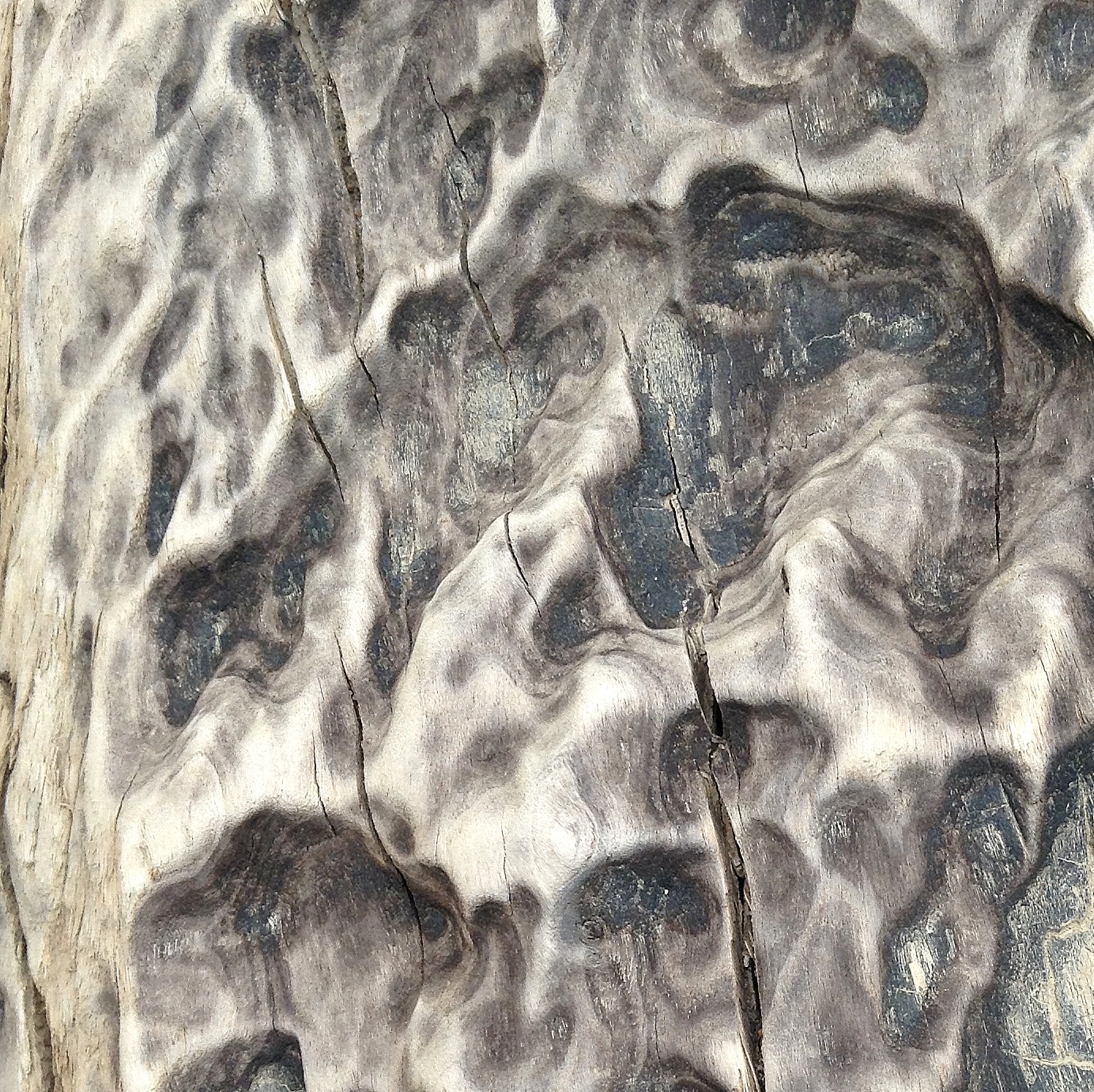
Part of the log had been burned by fire some time ago. Then the river had picked it up and carried it downstream. And over some additional unknown amount of time, the water had smoothed and shaped the charred wood into the natural work of art I was sitting on.

You might say that the drift log was the work of time.

I appreciated the textures and patterns, the muted coloring. Weathered wood. Grain and char. I took some pictures with my camera. And then I sat.

I often want not to think so much. I try to simply be in a place in time. Not asking questions or looking for answers. To be a little more like a turtle.

As I sat more like a human, I occasionally saw a turtle nose bobbing in the small ripples near my log. I watched the river flowing past. The fast, smooth surface over the deep pool below the Bowersock hydropower plant swirled into curls and eddies. Downstream, deep water became shallow water, pushing the river up into broken lines of low waves.

Reflected gray sky and muddy brown water in the ever moving and unending small waves and ripples turned into mesmerizing patterns. It all happened too quickly for my brain – and yet the patterns were beautiful within the workings of momentary time.

But if my human mind was not coming to rest, it had begun to drift.

Three herons stood spaced apart along the edge of low limestone island in the middle of the river. Necks stretched tall, they simply stood there watching as time and the river passed them by.

Farther down the bank, a handful of blackbirds perched in a tree. Two flew over and touched down on a strand of barbed wire on the fence around Bowersock. And seconds later they were gone.

To be easy. To be in the world within the reach of my senses. To be within time. What I want is to be here.

The log was comfortable enough as I straddled it, riding down the rocks, never quite reaching the water. Earth, sky, water, and fire. Patterns. A little time and attention.

And so I waited. For what? The river is always the same and never the same. In any case, it would soon be time for me to head for home for supper.

I thought about Otis Redding. I tried to sing his song, forgetting most of the words. I remembered this much:

I'm sittin' on the dock of the bay
Watchin' the tide, roll away
I'm sittin' on the dock of the bay
Wastin' time

Who’s to say what is wasted? And what is there to keep? After spending an hour or so by the river, that time would surely be gone.

I think of time as a river. But the metaphors will only take you so far.

There were three turtles.

The log I sat on had been burned by fire and then in the drifting downstream, the surface of the log had been shaped and smoothed into a work of natural art.

I watched the river drifting by.

And then I slipped silently away.


Tuesday, April 9, 2019

Melancholy in a glass


This story might not be as dreary as it sounds. But maybe it is. There's only one way to find out. It all began one day in February - a month with no good reason to exist if there ever was one ...

Melancholy in a glass - a podcast ~ 10 min.

Thursday, March 21, 2019

Pilings Point: A place on earth


We began with climate change.  You handed me a glass of iced tea and I said something about plastic straws. And in no time we were half way to the end of human civilization. Then some customers walked through the front door and you turned to take their orders.

I sat there staring out of the window at the cars driving by on Mass Street. Carbon emissions on wheels. Eventually my glass was empty and I walked out the back door.

I turned down the alley, walking on broken asphalt, power lines overhead, dumpsters pushed against brick walls, graffiti and grime all around me. As I walked towards the river, I kept turning the arguments about climate change over and over in my head to no end.

And then I was standing alone on the Kaw River Bridge. And as I looked out over the river towards the horizon, I suddenly realized that it wasn’t climate change that I wanted to talk about. Not humanity. Not the planet.

All that I really wanted was to simply walk along river with you. We might talk about the sky. Or the earth. Or the trees along the levee.  We might talk about the river rolling along to the sea. Or we might talk about nothing at all. Just walk.

I am old. You are young. I am the past. You are the future. But what do I know that is worth the telling? I would rather just show you one place on earth that I care about.

There’s a place along the Kaw River I call Pilings Point. It’s not far. About a half-mile downstream along the levee trail from the bridge. At a gravel cut through the large limestone boulders that line the inside of the levee we would half-slide down to a lightly traveled path. The path would take us through a fringe of river bottom forest to a muddy ravine. Sometimes there’s a trickle of water in the bottom, but it’s not difficult to jump from one side to the other. And then, the river would be before us.

Pilings Point is just a small point of rock jutting out into the Kaw River. The stumps of the pilings from a long gone railroad bridge march down into the water. You can look downstream to where the river bends behind the trees on the near bank. Upstream you can see the bridge back in the distance. The city is hidden behind the far bank. Pilings Point becomes, for me, a world all its own.  

As places go, Pilings Point is not particularly picturesque. There’s trash scattered here and there, washed down from upstream or tossed aside by people who have been here before. You have to step over lengths of rusted steel cable tangled among the rocks. Just a little farther downstream, on the far bank, you can see large slabs of broken concrete, dumped down the bank to keep the river from carving the soil away. You can still hear the faint sounds of cars driving back and forth across the bridge. And the Kaw River itself is hardly pristine, the water laden with eroded farmland and chemicals.

But the quite evident wastefulness and lack of respect for the natural world is simply not what matters to me. Of course, I see the garbage. I am aware of the toxic chemicals in the water. And I know very well how the Kaw is far from being a wild prairie river it once was. The Kaw River has been both tamed and despoiled.

But when I walk to Pilings Point, I come to see the river, not the desecration. I watch the sun sparking off the ripples on the water. Sometimes piles of puffy clouds drift by. Sometimes the skies are gray. I listen to the wind. I feel it against my face. I see gulls flying. I walk along the edge of the river, sand shifting under my feet. I can crouch down by the river and feel the water flowing through my fingers. And the river always rolls on by, sometimes faster, sometimes slower. Pilings Point is a place on earth. I come to witness the evident beauty - and the wonder.

This is what I want you to know. Over time, as I come to Pilings Point, engaging my senses, this particular stretch of river has become a place where I belong. The river in this singular place still lives. You can breathe the spirit of the river into your soul.

I believe that a person enters into a place. You go to a place - watching, listening, touching. It is a matter of some time, of repetition. A place doesn’t belong to you, rather, in attending, one day you discover that you belong in that place.

So if I could, I would take you to Pilings Point. You would see for yourself what there is to see.

And maybe this is all it would be. Just a walk. Some trees. Rocks. A river. The sky above and the earth below.

Or maybe it would be more. We might walk away from Pilings Point caring a little more about a place on the earth and about each other.

And that is where everything begins.

Wednesday, January 30, 2019

I leaned in


      I leaned in
 Bert Haverkate-Ens


I leaned over the sink
and was struck
full in the face,
really, it was more
of a glancing blow,
no really,
it was a warm caress,
so unexpected
that I nearly ducked
my head.
Well, I dodged,
and then I leaned in.
It was only the winter sun,
looking in,
only to touch my face,
only to remind me
of its concern.
I left the dishes
and ran off with the sun.
Really, we walked together,
silently, warm against the cold,
remembering old times.

Tuesday, January 15, 2019

Snowlights


The camera lies. The mind plays tricks. Except for cropping, these images of the same snow covered tree along Mass Street are what the camera saw.


The color of the whole tree is more or less as I remember. Looking up from underneath mostly shows you where I was standing at the time.


In either case, the surprise and wonder that I felt when I happened upon this tree colored by the bright streetlight has mostly faded into memory.

Now and again I come onto a scene I have photographed before because I thought it was memorable. And then when I come by again, what I see is not what I thought I remembered. From past to present, certainly things feel differently to me. And where did that tree come from?

And sometimes I wonder this. When I have seen your face countless times and I have seen photographs of you again and again, who am I seeing? And who am I? There’s a kind of magic in the seeing and remembering the moments of our lives. Now you see it. Now you don’t.

The camera lies. The mind plays tricks. What you see is not what you get. Yesterday is gone. Tomorrow will be another day. What will I see around the corner? Don’t blink, you might miss it. Watch the birdy. Say cheese.

All I can say is this: I never saw it coming. I never saw her coming. And I cannot remember now what I saw then.

If I keep my eyes open, what might I see?

A snow covered tree colored by a bright streetlight on Mass Street?

And might I see you?

Snowstones


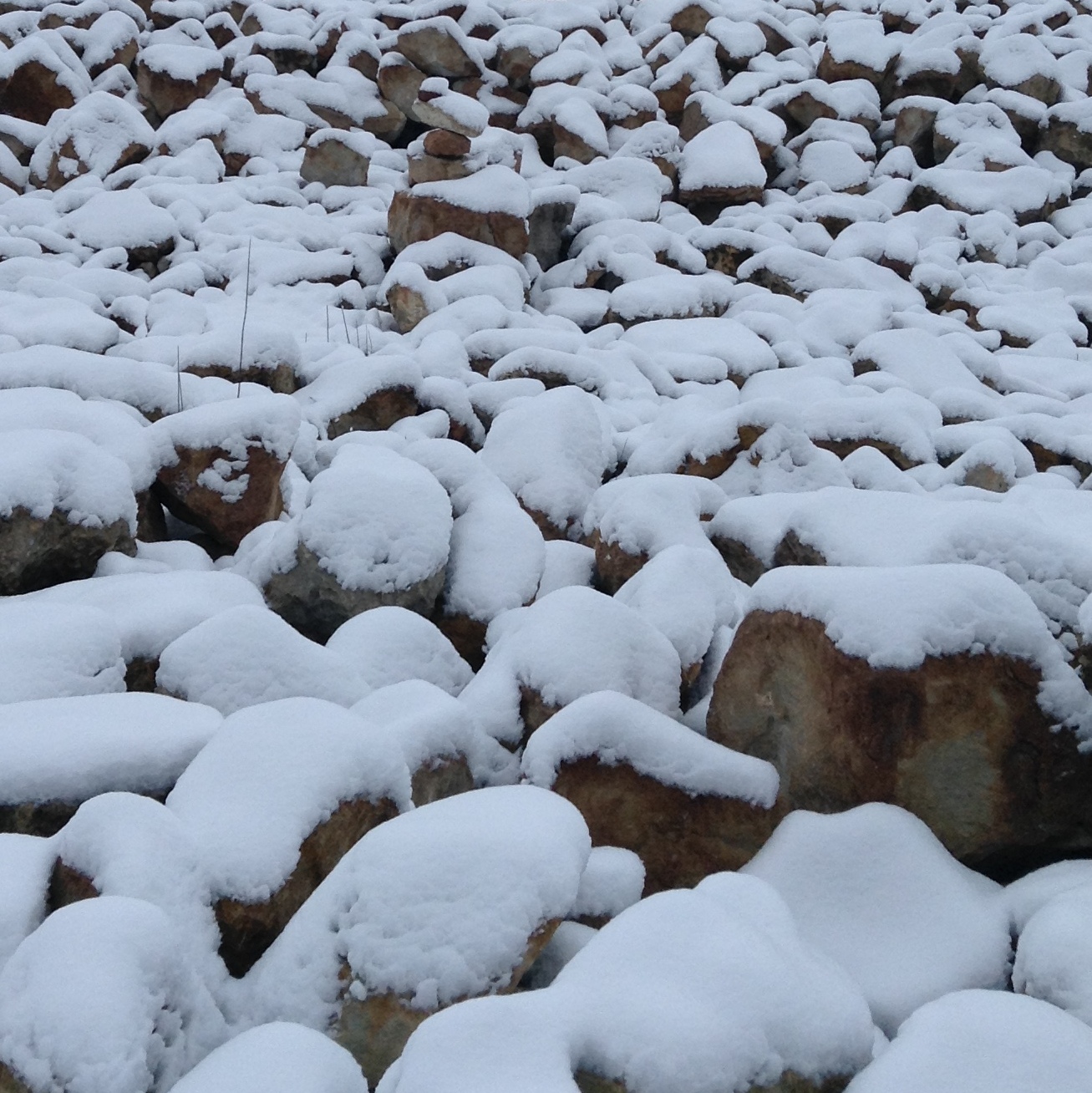
Same place. Same day. Same stones. Same snow. Slightly different perspectives. The top photo in the series is the key to looking at the other photos. So which question is the one to ask: Do all stones look alike? Or what difference does it make anyway? Or is everything just a matter of how you look at it? If you look carefully, what do you see in these photos? The safe answer is snow and stones. There are other answers. (Click a photo to enlarge them in slideshow format if you wish to compare the photos more carefully.


Another answer is that I had build a cairn here some months ago. It was well enough constructed and in the middle of a slope of large limestone boulders that it still stood. I knew that it was mine in part because I had topped it with a broken piece of red brick. The snowfall had changed everything, but I still knew where to look. And the snow had changed the look of everything. That I think is the answer that I was thinking of.

This is how it seems to me: What can be seen is a matter of perception - and of giving attention to a place over time so that what we look at becomes familiar enough that the changes over time reveal something of the soul of the place.

In this case, the cairn became a focal point. And the photos have been taken of the same subject from different angles. Otherwise the patterns of snow and stone seem random. And beautiful.

Somehow, all of this matters to me.